

NASA advances preparations for the Artemis II mission
International media coverage once again highlighted preparations for the manned mission, seen as a milestone in the lunar program after decades.
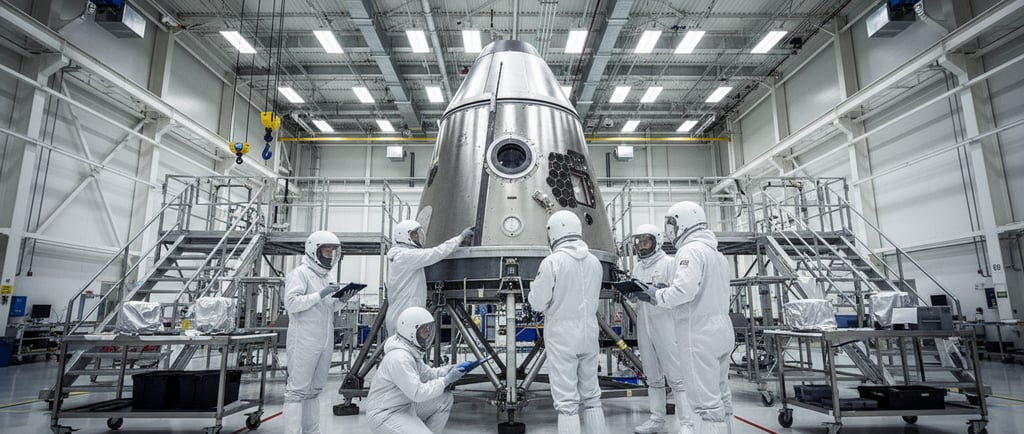
The Artemis II mission represents a pivotal moment in human space exploration, marking NASA's first crewed mission since the iconic Apollo program. As part of the broader Artemis program, this mission aims to lay the groundwork for sustainable exploration of the Moon, enhancing our understanding of lunar resources and preparing for future deep space endeavors.
Scheduled to launch following the successful Artemis I uncrewed mission, Artemis II will carry astronauts around the Moon, showcasing NASA's advancements in crew safety, lunar navigation, and orbital operations. The mission is designed to demonstrate critical capabilities required for eventual lunar landings and to pave the way for a sustained human presence on the Moon.
One of the primary goals of Artemis II is to test the systems integrated into NASA’s Orion spacecraft. This includes evaluating life support systems, communication capabilities, and navigation equipment during a crewed flight to the Moon and back. Such assessments are essential for ensuring the safety and success of future expeditions, specifically the planned Artemis III, which aims to land astronauts on the lunar surface.
Furthermore, Artemis II is significant not just for its technological advancements but for its role in uniting various international partners and private industries. This collaboration fosters innovation and shared knowledge, reinforcing global partnerships in space exploration. The mission encapsulates NASA’s vision for returning humans to the Moon safely and effectively, with an eye towards Mars as the next frontier.
In essence, the Artemis II mission is not merely a historic return to the Moon; it is a crucial step towards humanity’s next giant leap into space. This mission endeavors to establish a legacy of discovery that could ultimately lead to the colonization of other celestial bodies, marking a new era in our exploration of the cosmos.
Historical Context of Manned Lunar Missions
The exploration of the Moon by humans dates back to the 20th century, representing one of the most ambitious endeavors in space exploration. The Apollo program, initiated by NASA between 1961 and 1972, marked a significant chapter in this history, culminating in six successful crewed lunar landings. The first of these missions, Apollo 11, achieved a monumental milestone on July 20, 1969, when astronauts Neil Armstrong and Buzz Aldrin became the first humans to set foot on the lunar surface. This historic event not only showcased the technological prowess of the time but also emphasized the profound curiosity and ambition inherent in human nature to explore beyond Earth.
The Apollo missions employed a range of innovative technologies that have had lasting impacts on space exploration. The Saturn V rocket, for example, remains among the most powerful launch vehicles ever constructed. Additionally, advancements in life support systems, navigation, and communication were critical to the success of these missions. The lunar modules, specifically designed for landing and launching from the Moon's surface, demonstrated engineering capabilities that were groundbreaking for their time.
Lessons learned from the Apollo missions have significantly informed current preparations for Artemis II. Each Apollo mission provided invaluable data on lunar geology, environmental conditions, and the challenges of extended human presence in space. These experiences highlight the importance of developing robust safety measures and operational protocols, which will be fundamental for Artemis II and future lunar missions. As NASA revisits the Moon through the Artemis program, the insights gained from past missions will be instrumental in ensuring the safety and success of human exploration, paving the way for sustainable lunar presence and, eventually, future missions to Mars.
International Collaboration and Partnerships
Nasa's ambitious Artemis II mission emphasizes the importance of international collaboration and partnerships, which are integral to advancing exploration efforts beyond Earth. By working alongside various international space agencies and commercial entities, NASA enhances its capabilities and further promotes a collective approach towards lunar exploration.
One of the agency's primary partners is the European Space Agency (ESA). The collaboration involves the provision of the European Service Module (ESM), which powers the Orion spacecraft. This partnership harnesses shared expertise and resources, ensuring that both parties benefit from technical advancements while fostering goodwill among nations. The ESM not only offers propulsion but also provides critical life-support systems for astronauts, showcasing how international partnerships can yield effective solutions in aerospace engineering.
In addition to ESA, NASA is actively engaging with other world-leading space organizations, such as the Japan Aerospace Exploration Agency (JAXA) and the Canadian Space Agency (CSA). These collaborations are built on the foundation of shared scientific goals and technological innovation. For instance, the CSA contributes the Canadarm3, a critical robotic system planned for the Lunar Gateway, which will support lunar operations and maintenance. Such contributions highlight the significance of leveraging each agency’s unique strengths to achieve common objectives.
Furthermore, the involvement of commercial partners, particularly emerging private space companies, signifies a shift in exploration dynamics. Through public-private partnerships (PPPs), NASA provides non-exclusive access to resources and facilities and receives innovative technologies and services in return. This strategy not only accelerates mission timelines but also fosters economic growth within the space sector, benefiting a broad array of stakeholders.
Ultimately, these partnerships are vital for the Artemis program. They empower NASA to pool resources, share knowledge, and enhance its mission capabilities, while also reflecting a global commitment to advancing human presence on the Moon and beyond. This international approach promotes a unified exploration agenda that encourages diverse contributions and strengthens relationships among countries in the pursuit of knowledge and discovery.
Technological Innovations Driving Artemis II
The Artemis II mission is heralding a new era of space exploration, underpinned by significant technological innovations that promise to enhance crew safety, efficiency, and mission success. A cornerstone of these advancements is the Orion spacecraft, meticulously designed for deep space travel. The Orion crew module boasts state-of-the-art avionics, enabling real-time data analysis and communication, thereby ensuring that astronauts are well-informed of their condition and environment throughout the journey to the Moon. This integration of advanced systems facilitates improved situational awareness and operational flexibility.
In parallel, the life support systems of Artemis II represent a substantial upgrade over previous missions. These systems will recycle air and water, ensuring that astronauts maintain a sustainable environment in the unforgiving vacuum of space. The advanced technology not only minimizes the need for resupply missions but also reduces the weight of the spacecraft, critically important for long-distance travel. For the Artemis II mission, NASA has implemented regenerative life support technologies capable of efficiently managing resources for extended durations of time, thus marking a pivotal shift in how astronauts live and work during deep space missions.
Propulsion technology also sees remarkable advancements, particularly with the Space Launch System (SLS) rocket. The SLS combines high-thrust liquid engines with solid rocket boosters to provide unprecedented lift capacity, ensuring that both crew and cargo can be carried beyond low Earth orbit. This innovative propulsion system is designed to be versatile for future lunar and deep-space missions, reinforcing NASA’s commitment to sustainable exploration of the cosmos. Each of these technological developments not only fulfills immediate mission needs but also lays the groundwork for future exploration, marking an essential step forward in humanity’s quest to return to the Moon and beyond.
Training and Preparation for Astronauts
The astronauts selected for the Artemis II mission undergo an extensive and multifaceted training program designed to ensure their preparedness for the complexities of lunar exploration. This rigorous regimen encompasses a variety of training methods, each aimed at honing specific skills and fostering teamwork among the crew.
One pivotal component of their preparation involves simulations, where astronauts practice critical mission scenarios. These simulations replicate the conditions they will encounter during the actual mission, allowing crew members to familiarize themselves with the spacecraft's systems, operational protocols, and emergency procedures. The use of high-fidelity simulators enables astronauts to experience liftoff, lunar orbit, and surface operations, enhancing their ability to respond effectively to potential challenges.
Physical training plays a significant role in the astronauts' preparation as well. Given the physical demands of space travel, a well-rounded fitness program is implemented to ensure each astronaut maintains peak physical condition. This routine includes cardiovascular exercises, strength training, and flexibility workouts that are essential for adapting to microgravity conditions. Furthermore, astronauts are also trained to handle the potential effects of spaceflight on their bodies, such as muscle atrophy and bone density loss.
Mission integration exercises are another crucial aspect of training. These exercises foster teamwork and enhance collaboration skills among the crew members, as they work together to solve complex problems and execute mission plans. This training emphasizes communication and establishes a cohesive unit capable of functioning efficiently in the challenging environment of space. Each astronaut's role is clearly defined, and joint exercises help solidify collective responsibility for mission success.
Through this comprehensive training program, NASA ensures that astronauts are thoroughly equipped for the Artemis II mission, ready to tackle the obstacles they may face during their journey back to the Moon.
Public Interest and Media Coverage
The Artemis II mission, poised to be a significant step in humanity's return to the Moon, has captured considerable attention from both the public and media outlets. The rebuilding of lunar exploration capabilities has sparked a renewed interest in space travel, with atmospheric excitement surrounding NASA's latest endeavors. Coverage has burgeoned across platforms, highlighting not only the technological advancements involved in Artemis II but also the mission's broader implications for future extraterrestrial exploration.
In recent months, various media channels have engaged in extensive reporting on the preparations for Artemis II. News networks, scientific journals, and social media have spotlighted key developments, such as the selection of crew members and the technological tests required to ensure a successful mission. This consistent media coverage serves to inform and educate the public about the intricacies involved in space exploration while stimulating enthusiasm for upcoming milestones. Moreover, major media outlets have invited expert commentary, featuring scientists and NASA officials who elucidate the mission's objectives and its potential to lay the groundwork for sustainable lunar habitation.
Public engagement initiatives have also played a crucial role in reinforcing interest in Artemis II. NASA's outreach programs aimed at schools, museums, and community organizations have fostered a dialogue about the significance of lunar missions. By organizing events such as public lectures, educational workshops, and live streams of mission progress, NASA has successfully encouraged public participation. This initiative not only increases awareness about space exploration but also inspires future generations to pursue careers in science, technology, engineering, and mathematics (STEM).
The cultural importance of returning to the Moon cannot be understated. As humanity embarks on this new chapter in its exploratory journey, the collective aspiration to explore further into the cosmos deepens. The Artemis II mission symbolizes the indomitable human spirit of discovery, reminding society of our potential to push boundaries and adapt to challenges. As media coverage continues to expand, it reflects a growing public fascination with the universe, fostering a sense of connection and shared purpose as we look toward the stars.
Future Implications of the Artemis II Mission
The Artemis II mission, as a pivotal step in NASA's human exploration initiatives, promises significant implications for future lunar exploration and beyond. Its success is anticipated to serve as a cornerstone for establishing sustainable human presence on the Moon. By demonstrating advanced capabilities in human spaceflight, technology development, and mission execution, Artemis II will provide essential data and experience that can be leveraged for future lunar missions and interplanetary travel.
One of the foremost objectives of the Artemis program is the establishment of the Lunar Gateway, a space station that will orbit the Moon and act as a staging ground for various missions, including those aimed at lunar surface exploration. The success of Artemis II will validate the operational framework necessary for long-term lunar habitation, which includes life support systems, resource utilization, and habitat construction. These developments are crucial for ensuring that future missions can sustain human life for extended periods, thereby advancing our understanding of lunar resources.
Moreover, the technologies and lessons learned from the Artemis II mission are expected to accelerate the timeline for future Mars missions. NASA has already expressed its aspirations to send humans to Mars in the 2030s, relying heavily on the experience gained from lunar activities. The Moon serves as a testing ground, enabling scientists and engineers to refine their methods for safe travel, habitation, and exploration in a Martian environment.
Ultimately, the implications of the Artemis II mission extend beyond just lunar exploration; it signifies a renewed commitment to space exploration as a unifying endeavor that can inspire global collaboration. As nations come together to push the boundaries of what is possible, the lessons learned through Artemis II could mark the dawn of a new era in human space exploration, paving the way not only to the Moon but also to the promising yet challenging horizons of Mars and beyond.
MSM GLOBAL NEWS
Follow news and analysis accurately.
All rights reserved MSM GLOBAL NEWS© 2026.