

India's Commitment to Solar Energy: A Sustainable Future
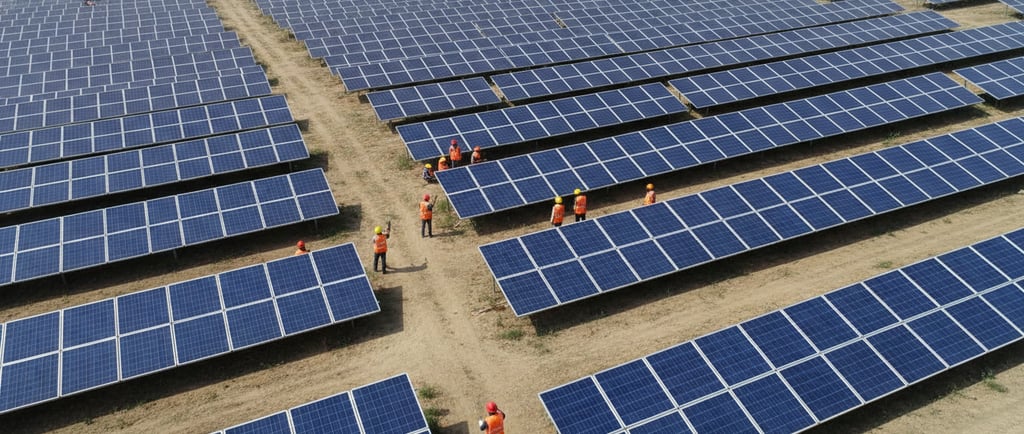
New project expands clean energy production on a large scale.
3/26/20267 min read
Introduction to Solar Energy in India
Solar energy has emerged as a vital component of India’s energy landscape, representing a sustainable solution to the country's growing energy demands. With a population exceeding 1.4 billion, India faces immense pressure to provide reliable electricity while transitioning towards more environmentally friendly energy sources. As traditional fossil fuels contribute significantly to greenhouse gas emissions and climate change, the exploration of renewable energy forms, such as solar power, has become not only necessary but also urgent.
The importance of solar energy is underscored by India's geographical advantages. Given its location, India receives abundant sunlight throughout the year, making it one of the most favorable countries for solar energy generation. This renewable energy source holds the potential to meet a substantial part of the country's increasing energy requirements. Moreover, solar energy production is scalable, ranging from small rooftop installations to large solar farms, providing flexible options for both urban and rural settings.
The Indian government has recognized the potential of solar energy in combating climate change and reducing dependency on fossil fuels. Initiatives such as the National Solar Mission aim to enhance solar power capacity and facilitate the adoption of clean energy technologies. These efforts also align with India's commitments under international climate agreements, demonstrating the nation's proactive stance towards achieving sustainability goals.
In essence, solar energy stands as a cornerstone in India’s commitment to elevate its renewable energy portfolio. As it continues to harness the sun's abundant resources, the future of energy production in India looks promising, paving the way for a cleaner and more sustainable environment for generations to come.
Current Solar Energy Landscape in India
As of 2023, India ranks among the world's leading nations in solar energy production, showcasing an impressive solar energy capacity of over 50 GW. This substantial capacity is a result of both government initiatives and private investments aimed at meeting the growing demand for renewable energy. India has set a target to achieve 100 GW of solar energy capacity by 2022 as part of its commitment under the Paris Agreement. Although the initial target was not fully realized, rapid progress continues to be made toward expanding solar installations.
Major states leading the solar revolution include Rajasthan, Gujarat, and Tamil Nadu. Rajasthan, in particular, has emerged as a frontrunner with its vast solar farms that take advantage of abundant sunshine in the region. The state's solar capacity exceeds 11 GW, largely due to projects such as the Bhadla Solar Park, one of the largest solar power facilities globally. In Gujarat, significant strides have been made with the development of the world's first solar power plant to achieve commercial viability and sustainability.
Both central and state governments play a crucial role in this growth trajectory. The Ministry of New and Renewable Energy (MNRE) has introduced various policies, subsidies, and incentives, which facilitate the establishment of solar energy projects. Additionally, state governments are increasingly implementing net metering policies and setting renewable purchase obligations that ensure utility companies buy power from solar producers. These measures are pivotal in enhancing the economic attractiveness of solar energy for both individual households and larger commercial entities.
In summary, the current solar energy landscape in India is characterized by robust growth driven by substantial capacity installations, targeted government policies, and notable participation from the private sector. As India continues to push forward in its renewable energy goals, solar power remains at the frontline of this vital transition towards a more sustainable energy future.
Recent Investments and Projects
India has made significant strides in the solar energy sector, establishing itself as one of the leading nations in renewable energy investments. In recent years, both the government and the private sector have ramped up their commitment to solar energy projects. The primary goal is to increase the share of renewable energy in the overall energy mix and to meet the ambitious target of 450 GW of renewable energy capacity by 2030.
One of the key initiatives is the government's Solar Parks Scheme, which aims to create solar parks across various states to facilitate the installation of solar projects at scale. By 2022, India was able to set up solar parks with an installed capacity of over 40 GW. Furthermore, several states, including Gujarat, Rajasthan, and Tamil Nadu, have initiated large-scale solar projects that not only cater to local energy needs but also contribute to national grid stability.
Private investments have also surged, with major corporations collaborating with international firms to develop solar farms. Noteworthy projects include the Kurnool Ultra Mega Solar Park in Andhra Pradesh, which boasts an impressive capacity of 1 GW, and the Bhadla Solar Park in Rajasthan, recognized as one of the largest solar parks in the world, with a capacity exceeding 2.5 GW. These projects not only enhance energy production but also create job opportunities and promote technological innovation in the solar sector.
Moreover, the Indian government is encouraging small and medium-sized enterprises to participate in solar installation and technology development, thereby broadening the scope of investment. By integrating public-private partnerships, India is poised to drive forward its solar energy agenda and ensure a sustainable energy future for its citizens.
Technological Advancements in Solar Energy
The field of solar energy has seen remarkable technological advancements over recent years, significantly improving both efficiency and accessibility. One of the most notable developments is the enhancement of solar panel efficiency. Traditional solar panels typically convert about 15-20% of sunlight into electricity; however, new technologies, such as bifacial solar panels and multi-junction cells, have pushed efficiencies upwards of 30%. These innovations allow for increased energy generation from the same surface area, thereby optimizing land use and enhancing the return on investment for solar energy projects.
In addition to improving solar panel technology, advancements in energy storage solutions have become crucial for enhancing solar energy's viability. Battery technologies, such as lithium-ion and flow batteries, are becoming more efficient and cost-effective. These systems enable the storage of excess energy generated during peak sunlight hours, making it available for use during periods of low sunlight or high demand. The integration of advanced storage options into solar energy systems facilitates a smoother transition to renewable sources, allowing for a more reliable energy supply.
Furthermore, the rise of smart grid technologies is transforming how solar energy is integrated into the national grid. These smart grids incorporate digital communication technology to detect and react to local changes in usage and supply, optimizing energy distribution. With smart meters and automated systems, utilities can effectively manage solar energy inputs, minimizing issues related to grid stability and promoting a more resilient energy infrastructure. Through these technological advancements, solar energy is becoming not only a sustainable option but also an integral component of a modernized energy ecosystem.
Economic Impact of Solar Energy Investments
Investment in solar energy has significant economic implications, making it a cornerstone for sustainable growth in India. The shift towards solar energy has the potential to create numerous job opportunities across various sectors. According to recent studies, the solar industry has outperformed traditional energy sectors in job creation, providing direct employment in manufacturing, installation, and maintenance. This trend not only addresses unemployment but also equips the workforce with skills that are vital for the transition to a greener economy.
Moreover, India’s commitment to expanding its solar energy capacity can attract foreign direct investment (FDI). Investors are increasingly looking for stable and sustainable markets, and India's proactive policies to promote renewable energy make it an attractive destination. Government initiatives, such as financial incentives and easing regulations, are designed to foster a conducive environment for foreign companies looking to invest in solar energy projects. As more international firms enter the market, they bring in capital, technology, and expertise, further accelerating industry growth.
Besides job creation and foreign investment, the long-term economic benefits of reducing reliance on fossil fuels are increasingly evident. By investing in solar energy, India can diminish its dependency on imported fossil fuels, leading to enhanced energy security and reduced vulnerability to global price fluctuations. This shift not only contributes to stabilizing the domestic economy, but it also helps mitigate the environmental impact associated with fossil fuel consumption. As a result, solar energy investments can drive sustainable economic growth, creating a resilient infrastructure that supports India’s aspirations for a greener future.
Challenges Facing Solar Energy Expansion
India has made significant strides in the deployment of solar energy, yet the path to widespread adoption faces multiple challenges that could impede growth. One prominent barrier is regulatory constraints, as the solar industry navigates a complex framework of policies and regulations across different states. Variations in solar policies, including differences in tariffs and incentives, can create confusion and uncertainty for investors and developers, dissuading them from committing to long-term projects.
Moreover, land acquisition issues pose a substantial hurdle. Large-scale solar parks require vast tracts of land, and the process of acquiring this land can be time-consuming and contentious. Conflicts with local communities, environmental regulations, and bureaucratic delays often slow down progress. In many cases, the unavailability of contiguous land parcels suitable for solar installations can further complicate efforts to scale up solar capacity.
Financial constraints also significantly impact the expansion of solar energy. Although the cost of solar technology has decreased, access to financing remains a challenge, particularly for smaller players. Many potential investors express concerns over the long gestation period and perceived risks associated with solar projects, resulting in limited funding options. The financial stability of project developers is often scrutinized by banks and investors, which can stifle innovation and deter new entrants to the market.
Finally, there is an essential need for infrastructure improvements to support the integration of solar energy into the existing grid. Upgrading transmission lines and enhancing storage capabilities are vital to accommodate the variable nature of solar power. Without these improvements, the effective utilization of solar energy will remain constrained, preventing India from reaching its ambitious renewable energy targets.
Future Prospects and Conclusion
As India continues its journey toward a sustainable future, the prospects for solar energy are increasingly promising. The Indian government has set ambitious targets to expand the nation’s renewable energy capacity, with a particular emphasis on solar power. By aiming to achieve 280 GW of solar energy capacity by 2030, the Indian authorities are paving the way for a cleaner and more resilient energy landscape. These goals align with global commitments to reduce carbon emissions and combat climate change, showcasing India's proactive approach to sustainability.
Future developments in India’s solar sector will likely be driven by technological advancements, reduced costs of photovoltaic technology, and increased efficiency of solar panels. The rise of innovative business models, such as solar leasing and power purchase agreements, will further facilitate the widespread adoption of solar energy among both residential and commercial consumers. Moreover, government initiatives aimed at simplifying the regulatory environment and providing financial incentives will play a crucial role in encouraging investment in solar projects.
Equally important is the role of citizens and businesses in supporting the transition to clean energy. Community engagement and public awareness campaigns will foster a culture of sustainability and encourage more individuals to adopt solar solutions. Furthermore, businesses can contribute by integrating solar energy into their operations, thereby reducing their carbon footprint and enhancing their corporate social responsibility (CSR) initiatives.
In conclusion, the future of solar energy in India looks bright. With a supportive government framework, technological innovation, and active participation from all stakeholders, solar energy has the potential to transform India's energy landscape. As the nation moves forward with its clean energy ambitions, it is imperative that all sectors work together to realize a sustainable, energy-secure future for India.
MSM GLOBAL NEWS
Follow news and analysis accurately.
All rights reserved MSM GLOBAL NEWS© 2026.