

Introduction to the South China Sea Dispute
The South China Sea, a vital maritime area in Southeast Asia, has emerged as a focal point of geopolitical tension due to its strategic significance and the wealth of natural resources it harbors. Covering approximately 1.4 million square miles, this sea is not only a critical shipping route, facilitating trade between major economies, but is also believed to possess substantial oil and natural gas reserves. The region's importance extends beyond its economic potential, as it serves as a crucial geopolitical arena where multiple nations are vying for influence.
The South China Sea is surrounded by several countries, each asserting territorial claims influenced by historical narratives, international laws, and national interests. China, Taiwan, Vietnam, the Philippines, Malaysia, and Brunei are the primary nations involved in these disputes, with China’s assertive posture being particularly notable. Claiming over 90 percent of the South China Sea under its so-called "nine-dash line," China has built artificial islands and established military installations, exacerbating tensions with its neighbors and raising concerns from global powers.
These territorial disputes are multifaceted, encompassing a variety of overlapping claims and conflicting interpretations of sovereignty. Vietnam and the Philippines, for instance, have challenged China's assertions through diplomatic protests and legal frameworks, primarily invoking the United Nations Convention on the Law of the Sea (UNCLOS). As such, the South China Sea disputes not only involve the competing interests of neighboring states but also draw in the strategic calculations of outside powers, notably the United States, which has emphasized freedom of navigation and regional stability. Consequently, the geopolitical landscape in the South China Sea continues to evolve, shaped by both historical contexts and contemporary developments, laying the groundwork for understanding the recent military intensifications by China in the region.
Recent Military Exercises by China
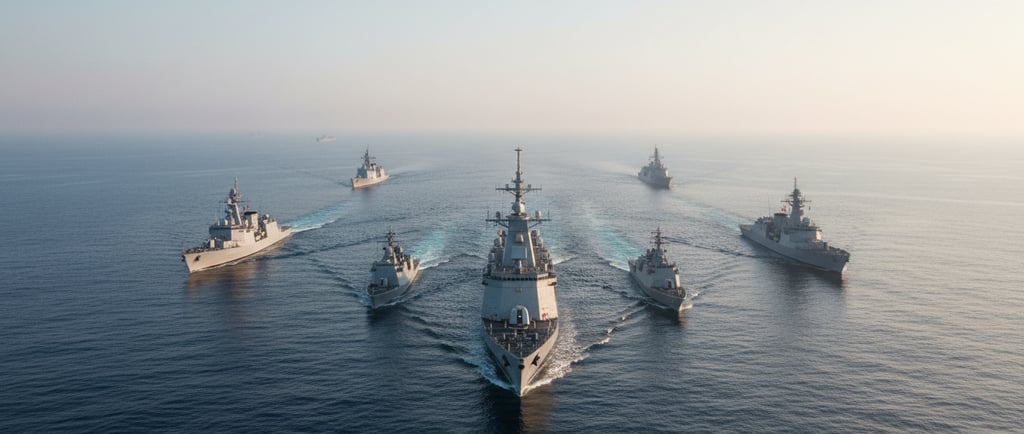
In recent months, China has significantly intensified its military presence in the South China Sea through a series of large-scale military exercises. These operations involve various branches of the People’s Liberation Army (PLA), including naval, aerial, and ground forces, showcasing a comprehensive military preparedness aimed at asserting China’s territorial claims in the contested waters of the South China Sea.
One notable exercise involved live-fire drills that were conducted near the Paracel Islands, an area claimed by Vietnam and Taiwan as well. This exercise not only aimed to test the operational readiness of the military but also served as a demonstration of military might, reinforcing China's strategic posture in the region. Additionally, aircraft carriers and advanced fighter jets participated in these drills, responding to perceived threats from foreign military activities nearby.
The purpose of these military exercises extends beyond mere defense mechanisms. They are instrumental in showcasing China’s ability to project power and influence, particularly in regions where territorial disputes are prevalent. By conducting such operations, China aims to deter other nations from establishing a military presence conducive to counterbalancing its influence in the South China Sea. Furthermore, these drills have included joint exercises with neighboring countries, emphasizing China’s intention to strengthen regional partnerships while simultaneously maintaining a formidable military deterrent.
Furthermore, analysts suggest that these military maneuvers are indicative of a long-term strategy to establish operational dominance in these key maritime corridors. The scale and frequency of these exercises reflect a potent shift in the regional security dynamics, warranting attention from global powers with vested interests in the South China Sea. It is evident that the recent military activities mark a significant escalation in China’s military posture and have far-reaching implications for regional stability.
Reactions from Neighboring Countries
The intensifying military presence of China in the South China Sea has elicited a spectrum of responses from neighboring countries, particularly Vietnam, the Philippines, and Malaysia. Each nation’s reaction reflects a blend of diplomatic, military, and public sentiments concerning national security and territorial sovereignty.
Vietnam has been vocally opposed to China’s assertive actions in the region. The Vietnamese government has called for a peaceful resolution to the disputes, emphasizing the need for adherence to international law. Diplomatic efforts include leveraging relationships with other Southeast Asian nations to forge a united front. Additionally, Vietnam has bolstered its naval capabilities in response to perceived threats, which signals a clear message about its commitment to protect its territorial integrity within the contested waters.
Similarly, the Philippines has expressed serious concerns over China's aggressive maneuvers in the South China Sea. The Philippine government has sought to strengthen its military ties with the United States and other ally nations as a countermeasure. This partnership aims to enhance the country’s maritime security and defense capabilities, underscoring its determination to safeguard its rights under international law. Furthermore, public sentiment in the Philippines has increasingly aligned with government calls for asserting sovereignty in the face of foreign aggression.
Malaysia’s approach has been more cautious, advocating diplomacy and dialogue to alleviate tensions. While Malaysia maintains it will not compromise its sovereign rights, it has refrained from openly antagonizing China. The Malaysian government has been working to balance its relations with China, relying on bilateral discussions while simultaneously engaging in joint naval exercises with partner countries to enhance maritime security.
In conclusion, the responses from Vietnam, the Philippines, and Malaysia illustrate varying strategies in addressing the challenges posed by China's militarization of the South China Sea. These reactions highlight a shrinking window for diplomatic resolutions, increasing the likelihood of military escalation in the region as national interests collide.
Impact on Regional Security Architecture
The South China Sea is a pivotal area for international trade and security; thus, China’s intensified military presence is reshaping the regional security architecture significantly. The assertive military expansion, which includes the establishment of artificial islands and deployment of naval forces, has raised alarms among neighboring countries, leading to heightened tensions and a recalibration of defense policies across the region. As a result, traditional alliances and regional organizations are compelled to reassess their strategic priorities and collaborative efforts.
Countries such as Vietnam, the Philippines, and Indonesia have responded to China’s aggression by strengthening their military capabilities and enhancing bilateral security cooperation with external powers, primarily the United States. The U.S. has reaffirmed its commitment to defend its allies and maintain freedom of navigation in the South China Sea, thus reinforcing its role as a security guarantor in the region. Furthermore, collaborative exercises and joint operations have increased among regional partners, reflecting a collective effort to deter potential hostilities and bolster defense readiness against any aggressive maneuvers.
Regional organizations, such as the Association of Southeast Asian Nations (ASEAN), are also experiencing the ripple effects of China’s military assertiveness. While ASEAN has a long-standing principle of non-interference, the challenge posed by China's actions is pushing member states to forge stronger consensus on maritime security. The dichotomy between ASEAN unity and the varying levels of dependence on China complicates the organization’s ability to address regional security threats effectively. Consequently, there is an observable shift towards more proactive collective engagement, signaling a potential evolution in the security dynamics of Southeast Asia.
Overall, China’s enhanced military presence not only complicates existing security relations but also raises the specter of conflict escalation. As nations recalibrate their defense strategies in response to these developments, the stability of the South China Sea hangs in a delicate balance, necessitating ongoing dialogues towards a framework that enhances security cooperation without exacerbating tensions.
Impact on Strategic Trade Routes
The South China Sea is one of the most crucial waterways for global trade, facilitating approximately one-third of the world's maritime traffic. With key shipping lanes traversing this region, the South China Sea serves as a lifeline for international commerce, extending from Asia to European and American markets. As China intensifies its military presence in this area, there are growing concerns regarding the potential disruptions to trade flows and the implications for shipping freedom and economic stability.
Increased military activities, including naval drills and the establishment of military outposts, are contributing to heightened tensions among regional nations and beyond. This militarization raises the possibility of confrontations that could affect uninterrupted shipping routes. A disruption, whether through direct conflict or enhanced regulations imposed by militaristic stances, may lead to increased shipping times and costs, creating a ripple effect on global supply chains.
Moreover, the potential for miscalculations and accidents at sea escalates when military assets operate in close proximity to commercial shipping lanes. Such scenarios could compel shipping companies to reroute their vessels, thus prolonging delivery times and inflating freight costs. These developments ultimately pose risks to the principles of free navigation that underpin international trade, with nations involved in the dispute grappling with the potential economic ramifications.
Furthermore, the pursuit of military posturing could intensify trade tensions not only between China and neighboring Southeast Asian countries but also extend into broader contexts involving economies like the United States. The implications for international economic stability are profound, as disruptions may lead to a decline in consumer confidence, influencing markets and trade relationships worldwide.
International Response and Global Implications
The escalation of China’s military presence in the South China Sea has elicited varied responses from the international community, especially from major global powers. The United States, a prominent actor in the region, has expressed significant concern regarding China’s assertive posture. Through diplomatic channels, the U.S. has reiterated its commitment to a free and open Indo-Pacific, emphasizing that it will continue to conduct freedom of navigation operations to challenge excessive maritime claims. Such military maneuvers not only demonstrate the U.S.'s resolve but also underline its strategic interest in ensuring that shipping lanes remain open and secure for international trade.
Other nations in the region, including Australia and Japan, have likewise voiced apprehension regarding the implications of a militarized South China Sea. These countries have increased cooperative security initiatives, including joint naval exercises, which aim to enhance interoperability and demonstrate solidarity against coercive actions by China. Notably, ASEAN nations find themselves navigating a delicate balance; while several member states share concerns over Beijing’s activities, they also seek to maintain economic ties, given China’s status as a crucial trading partner.
The implications of these responses extend beyond regional security; they influence global politics and international law as well. The South China Sea is not only a contested area but also a crucial site for maritime navigation. As disputes intensify, the tenets of international law, particularly the United Nations Convention on the Law of the Sea (UNCLOS), come into sharp focus. Countries surrounding the South China Sea, often relying on UNCLOS for legal backing against claims of sovereignty, are observing how international norms will evolve in response to China’s assertiveness. This situation could set precedents for future maritime disputes, shaping the conduct of international relations in the decades to come.
Conclusion and Future Outlook
In recent years, China's military presence in the South China Sea has become a focal point of regional and global concerns. The assertive construction of military installations on artificial islands, coupled with regular naval exercises and patrols, has increased tensions among neighboring countries and drawn international scrutiny. This blog post has highlighted key developments in China's military activities in this critical maritime area.
The implications of China's military enhancements are multi-faceted, impacting not only regional security but also international maritime law and trade routes. As China continues to assert its claims over disputed territories, it heightens the risk of confrontations with other nations, particularly those with competing territorial claims such as the Philippines, Vietnam, and Malaysia. Furthermore, the United States and its allies' strategic responses to these developments could exacerbate the situation, leading to an arms race or increased military presence in the region.
Looking ahead, the prospects for de-escalation or further escalation are complex. On one hand, diplomatic efforts and multilateral engagements could foster dialogue, enabling countries to reach a consensus on managing disputes in the South China Sea. Initiatives like the Code of Conduct negotiations among ASEAN nations and China hold potential for reducing tensions through cooperative frameworks.
On the other hand, should nationalist sentiments persist and China continue its assertive posture, the likelihood of increased military engagement grows. This could undermine regional stability and threaten global trade routes critical to the international economy. In conclusion, the future of military presence in the South China Sea remains uncertain, dictated by the interplay between national interests, geopolitical strategies, and the overarching quest for stability in this vital area of the world.
MSM GLOBAL NEWS
Follow news and analysis accurately.
All rights reserved MSM GLOBAL NEWS© 2026.