

Protests Erupt Across Australia Against Israeli President Isaac Herzog's Visit
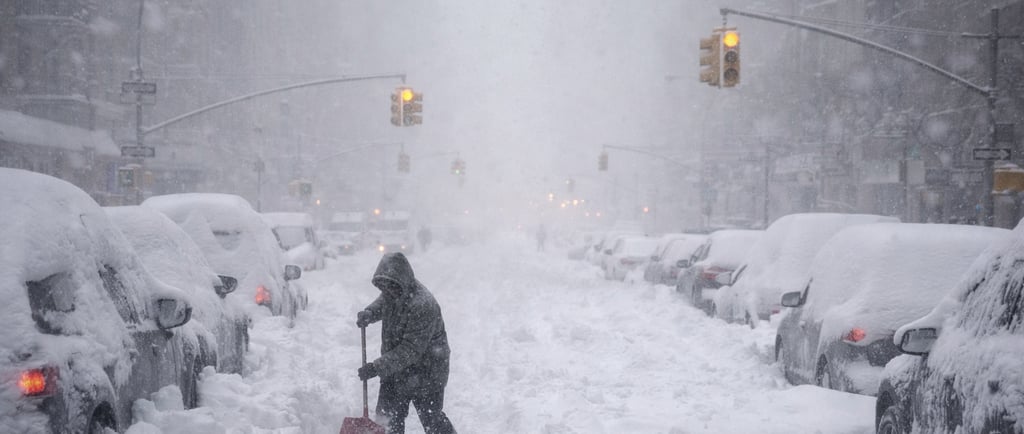
A severe blizzard struck the northeastern United States, piling up over 30 inches of snow in some areas and bringing travel to a near standstill. Highways were closed, trains and buses suspended, and approximately 7,400 flights had to be canceled due to dangerous conditions; more than 600,000 homes and businesses lost power during the storm. Governors of at least seven states declared a state of emergency, and authorities urged residents to stay indoors until the weather improved.
Introduction: The Context of Protests
The recent visit of Israeli President Isaac Herzog to Australia has sparked significant public dissent across various regions in the country. This visit, framed as an effort to strengthen diplomatic and economic ties between Australia and Israel, has been met with longstanding historical tensions that underscore the complexities of this relationship. Over the years, Australia's stance toward Israel has evolved, influenced by both national interests and international scrutiny concerning Israel's policies, particularly in relation to Palestine. These dynamics set the backdrop for the protests that erupted in response to Herzog's state visit.
The protests reflect a growing concern among Australian citizens regarding human rights issues linked to Israeli actions in the Palestinian territories. Numerous civil rights organizations, community groups, and individuals have rallied together, calling for increased attention to what they perceive as injustices faced by Palestinians. Such a collective mobilization underscores the demand for recognition of these issues on an international scale, particularly when high-profile visits such as Herzog's take place.
Amidst this backdrop, the political climate in Australia has been notably charged. With the current government's endeavors to navigate complex international relations, public sentiment towards Israel has shown signs of division. The protests are not merely expressions of dissent; they encapsulate broader debates about Australia’s foreign policy and its implications for relationships in the Middle East. As a result, the decision to welcome a leader like Herzog has ignited discussions that go beyond diplomacy, igniting public discourse on sensitive political and humanitarian issues.
In light of these factors, it is essential to consider the various dimensions that have contributed to this surge of activism across Australia. The interplay of historical grievances, political narratives, and current events frames the essence of the protests surrounding Isaac Herzog's visit.
Background: The 2025 Bondi Beach Attack
The incident that occurred at Bondi Beach in 2025 has become a critical reference point for understanding the recent protests across Australia against Israeli President Isaac Herzog's visit. On that fateful day, a violent confrontation broke out between groups contesting the ongoing Israeli-Palestinian conflict, which escalated due to the inappropriate actions of certain individuals leading to injuries among bystanders. The attack not only marked a turning point in public sentiment but also exposed the deep-seated frustrations and grievances within the Australian community regarding Israel's policies in the region.
The Bondi Beach attack garnered significant media attention, as it highlighted the increasing tensions surrounding discussions on international human rights issues, particularly as they pertain to the Israeli-Palestinian conflict. Activists and affected individuals pointed to the attack as a manifestation of broader societal issues, including racism and xenophobia, further complicating the narrative surrounding Israel's actions. Many members of the Jewish community expressed feelings of vulnerability and fear, leading to divisions that have had lasting repercussions.
As the Australian public began to grapple with the aftermath of the Bondi Beach attack, discussions surrounding policy responses and the nation's relationship with Israel intensified. Community leaders and policymakers were pressed to find ways to address the grievances illuminated by the incident. Demonstrations ignited as individuals sought to express their dissent towards perceived injustices against Palestinians and called for accountability from the Israeli government.
This turmoil surrounding the Bondi Beach attack has proved to be a significant undercurrent motivating protests. It serves as a reminder of the consequences of geopolitical conflicts that extend far beyond their borders, impacting local communities. The sociopolitical landscape, shaped by this incident, reveals a complex interplay between national identity, human rights, and international diplomacy, which continues to fuel ongoing demonstrations against Israeli leadership.
Overview of the Protests Across Major Cities
In recent weeks, Australia has witnessed a significant surge in protests across its major cities, namely Sydney, Melbourne, and Brisbane, coinciding with the visit of Israeli President Isaac Herzog. These protests, characterized by large gatherings, vocal expressions of dissent, and varied thematic concerns, have become a focal point for discussions surrounding Australia's foreign policy and its stance on Israel-Palestine relations.
In Sydney, thousands of demonstrators gathered outside the Australian Parliament, waving Palestinian flags and chanting slogans that criticized Herzog's policies. The protest highlighted a collective frustration regarding the ongoing conflict in Gaza and the Australian government's perceived support for Israel. Notable moments included speeches from local leaders and activists who shared personal stories and called for solidarity with Palestinian struggles.
Melbourne saw a similar turnout, with protestors marching through the city's streets, culminating in a rally at the city square. This event brought together a diverse cohort of participants, including various activist groups, students, and members of the local Middle Eastern community. The Melbourne protests were marked by artistic expressions, including murals and performances, aimed at raising awareness of the humanitarian crisis in the region.
Brisbane's protests showcased a different aspect of dissent, with participants voicing their demands for a clearer stance on human rights from the Australian government. The demonstrations included a significant youth presence, highlighting the engagement of younger generations with global issues such as social justice and human rights. Additionally, discussions around the intersection of local and international advocacy efforts were prevalent as speakers emphasized the need for collective action.
The unity among protesters across different Australian cities underscores a shared commitment to advocating for Palestinian rights and brings to light various motivations driving this social movement. This extensive participation reflects the increasing public interest in international affairs, particularly in relation to the humanitarian implications of foreign policy decisions.
Legal and Social Implications of the Protests
The protests against Israeli President Isaac Herzog's visit to Australia have ushered in a complex dialogue surrounding free speech and hate speech laws in the country. In Australia, the law defines hate speech in a way that balances the right to free expression with the need to protect individuals and groups from discrimination and vilification. According to the Racial Discrimination Act 1975, offensive or threatening speech that incites hatred based on race is restricted, implicating the actions and expressions of protestors who may have crossed these legal boundaries.
During the protests, there were instances of clashes between law enforcement and demonstrators, raising questions about the authorities' response to public assembly and dissent. The Australian police's obligation to maintain peace often leads to a delicate balancing act between protecting civic rights and ensuring public order. As some protestors faced charges, the conversations surrounding the limitations imposed on free speech became more pronounced. Legal experts analyzed whether the actions of the demonstrators were within the realm of legitimate protest or if they constituted hate speech.
These protests have illuminated broader issues about civic rights and freedoms in Australia. The ability to dissent in a democratic society is fundamental; however, this right comes with responsibilities. The events have sparked a debate over how Australia can foster an environment conducive to free expression while upholding societal values against hate. Different factions within the public sphere have emerged, either advocating for broader free speech protections or calling for stricter measures against potentially harmful expressions. As the discourse continues, it poses significant implications not only for the calibrations of legal frameworks but also for the future of activism and protests within the Australian context.
Response from Authorities and Community Leaders
In the wake of widespread protests across Australia against Israeli President Isaac Herzog's visit, various government officials and community leaders have expressed their perspectives on the situation. The protests, which have drawn significant attention, have sparked a mix of reactions among authorities, with some voicing support for the demonstrators' rights to free expression, while others have emphasized the need for public safety and order.
Government officials, including local lawmakers, have acknowledged the legitimacy of the protests as a means for citizens to voice their concerns regarding international relations and social justice. Many community leaders have called for dialogue, emphasizing that the protests highlight significant issues surrounding Australia's stance on Israel and Palestine. They suggest that such events should serve as a catalyst for meaningful discussions on foreign policy and the treatment of marginalized communities.
On the other hand, law enforcement agencies have expressed their commitment to managing the protests safely. Police forces have been tasked with ensuring that demonstrations do not escalate into violence, often deploying additional resources to manage large crowds. Some community leaders have criticized the police response, alleging that it may have been excessive in certain instances, which has led to further tensions between demonstrators and law enforcement. Numerous incidents have been reported where participants were detained, raising questions about the balance between maintaining public order and respecting the right to protest.
As the protests continue, discussions around the implications of Herzog's visit and its impact on the Australian community have intensified. These dialogues underscore the importance of addressing the underlying social issues that contribute to public unrest. Stakeholders at various levels remain engaged in efforts to create a safer environment for discourse, promoting understanding and cooperation within the diverse landscape of Australian society.
Media Coverage and Public Reaction
The recent protests across Australia against Israeli President Isaac Herzog's visit have captured the attention of various media outlets, highlighting differing narratives surrounding the events. Coverage has ranged from supportive portrayals of the protests to criticisms of the demonstrators, reflecting a complex social landscape. Major news organizations have reported on the scale and intensity of the protests, noting that they represent a broader discontent concerning Israel's policies and the ongoing Israeli-Palestinian conflict.
Different media outlets have adopted varying approaches in their framing of the situation. For instance, some mainstream media have emphasized the peaceful nature of the protests, underscoring the democratic right of citizens to express their dissent. On the other hand, certain reports have focused on incidents of violence or confrontations, which may skew public perception towards viewing the protests as more chaotic than constructive. This divergence in media narratives plays a crucial role in shaping public understanding of both the immediate events surrounding Herzog's visit and the larger Israeli-Palestinian context.
The public reaction to the protests has also been significantly influenced by the media portrayal. Social media platforms further complicate this dynamic, enabling rapid dissemination of images and videos that can evoke strong emotions and polarize opinions. Grassroots movements and community leaders have utilized these platforms to organize and amplify their messages, countering narratives that seek to delegitimize their actions. Conversely, the spread of misinformation can exacerbate tensions, creating misunderstandings about the intentions of the protesters and their demands.
Ultimately, the interplay between media coverage and public reaction is critical in understanding how the protests against Isaac Herzog's visit are perceived. The media's framing can either educate the public about the complexities of the Israeli-Palestinian conflict or contribute to further polarization, potentially impacting future dialogues on this sensitive issue.
Conclusion: The Future of Protests and Advocacy in Australia
The recent protests across Australia against Israeli President Isaac Herzog's visit signal a growing trend in civic engagement and activism within the country. As citizens express their discontent regarding various political issues, these demonstrations reflect a broader commitment to advocating for human rights and social justice. In the current political climate, the protests serve as a reminder of the power of collective action in shaping discourse and influencing decision-makers.
Community engagement is essential for fostering an environment conducive to constructive dialogue and political change. The events surrounding Herzog's visit highlight the importance of addressing not only immediate grievances but also the root causes of public dissent. Activism in Australia is poised to evolve as activists increasingly leverage social media platforms and traditional avenues of grassroots organization to mobilize support and raise awareness.
Furthermore, the potential for continued unrest remains significant if the underlying issues that fuel these protests are left unaddressed. The voices of the community, especially those of marginalized groups, must be acknowledged in both political and public discussions. This recognition could lead to a more inclusive approach in policy-making processes. Engaging with diverse perspectives can help foster resilience among communities and provide avenues for dialogue that emphasize rehabilitation rather than division.
In conclusion, the implications of these protests extend beyond a singular event. They illustrate a shifting landscape of activism in Australia, where public engagement is likely to continue influencing political agendas. As citizens demand transparency, accountability, and respect for human rights, the discourse surrounding protests will play a pivotal role in determining Australia’s advocacy landscape for years to come.
MSM GLOBAL NEWS
Follow news and analysis accurately.
All rights reserved MSM GLOBAL NEWS© 2026.