

NASA Postpones Artemis II Launch: What You Need to Know
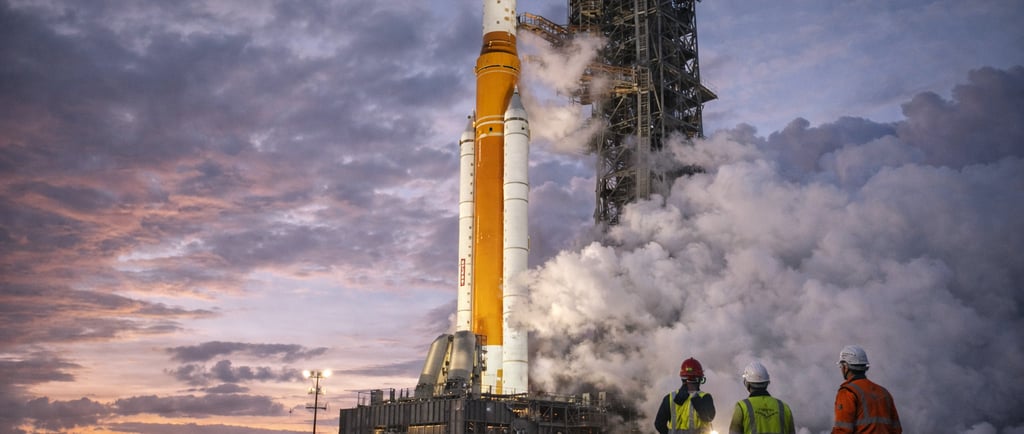
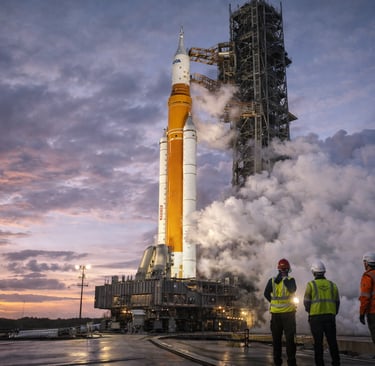
NASA has postponed the launch of Artemis II, the first crewed mission to the Moon since Apollo, to March (or early April) after a crucial fueling test identified a liquid hydrogen leak on the launch pad. Initially scheduled for early February, the mission – which will take four astronauts on a 10-day flyby of the Moon, without a landing – was delayed as a safety measure while engineers correct the problem and ensure the success of the Space Launch System rocket and the Orion capsule in their crewed debut.
Introduction to Artemis II Mission
The Artemis II mission represents a significant milestone in NASA's efforts to return humans to the lunar surface. This mission marks the first crewed endeavor since the Apollo program, which last sent astronauts to the Moon in 1972. Artemis II aims not only to honor the legacy of the Apollo missions but also to pave the way for future exploration of the Moon and beyond. The mission is part of NASA's broader Artemis program, which focuses on establishing a sustainable human presence on the Moon by the end of the decade.
The primary objective of Artemis II is to test the Space Launch System (SLS) and the Orion spacecraft with astronauts aboard. Through this mission, NASA seeks to validate key systems and gather data on performance capabilities in a deep-space environment. The crew will experience several crucial maneuvers, including a lunar flyby, which will enable researchers to evaluate spacecraft systems’ reliability and overall functionality during various phases of the mission.
The crew for Artemis II is composed of four experienced astronauts, representing a diverse mix of expertise and backgrounds. This selection emphasizes NASA's commitment to inclusivity and diversity in future space exploration missions. These astronauts will undergo extensive training and simulations to prepare for the challenges they will encounter as they journey around the Moon.
A successful Artemis II mission will not only set the stage for subsequent lunar exploration but also support NASA's long-term objectives of exploring Mars and other celestial bodies. As excitement builds around this mission, it is clear that the Artemis II mission holds tremendous potential to reinvigorate human interest in space exploration and technological advancements in aerospace engineering.
Reasons for Launch Delay
The Artemis II mission, which represents a pivotal step in NASA's efforts to return humans to the Moon, has been postponed due to significant technical concerns. At the heart of this delay is a crucial fueling test conducted on the launch pad, which exposed a liquid hydrogen leak. This particular leak has raised alarms regarding safety protocols and the overall readiness of the spacecraft for its intended mission.
The tests conducted prior to the Artemis II launch were designed to ensure that all systems were functioning optimally. However, the detection of a liquid hydrogen leak indicates a potential failure in the fueling system, which could jeopardize the mission's safety. Liquid hydrogen is a highly volatile substance commonly used as rocket fuel, and even a minor leak can result in catastrophic consequences if not addressed promptly and effectively.
This issue not only impacts the immediate schedule of the Artemis II mission but also highlights the complexities involved in aerospace engineering. NASA engineers are currently working diligently to understand the source of the leak and develop appropriate solutions. Their objective is to implement fixes that will guarantee the safety and reliability of the Orion spacecraft and its systems, thus ensuring crew safety during the mission.
Furthermore, addressing this issue may involve redesigning some components of the fueling system, which could prolong the timeline for the mission. The implications of this leak are significant, as they necessitate thorough testing and validation procedures to avoid similar problems in future missions.
Overall, the postponement of the Artemis II launch is a cautious and necessary step that underscores NASA's commitment to safety in space exploration. As the team works towards resolving these technical challenges, the timeline for the mission will be reassessed, reflecting the need to prioritize mission integrity over schedule.
Impact on NASA’s Artemis Program
The recent postponement of the Artemis II launch has significant ramifications for NASA’s Artemis program, which aims to establish a sustainable human presence on the Moon and ultimately enable crewed missions to Mars. One of the immediate effects of this delay is the potential ripple effect on the entire timeline of Artemis missions. As each launch is intricately linked, a setback in one phase can cause subsequent tasks and timelines to be re-evaluated and possibly pushed back.
Artemis II, designed to carry astronauts around the Moon, is a critical step in NASA's broader lunar exploration strategy. With delays, there could be implications on test flights, astronaut training, and the development of essential technologies for future missions. Scheduled missions such as Artemis III, which aims to land astronauts on the lunar surface, may also see shifts in their expected launch windows. This could result in a cascading effect on the Earth-to-Moon transportation capabilities and the International Lunar Gateway project, which are vital components of NASA's lunar endeavors.
Furthermore, the postponement raises questions regarding NASA's long-term goals. The Artemis program is not just focused on the Moon; it serves as a stepping stone for preparing future crewed missions to Mars. Delays in lunar landings and exploration could impact the timelines initially set for Mars, especially considering the political, fiscal, and logistical aspects tied to interplanetary missions. As NASA navigates these challenges, stakeholders and partners must adapt to new schedules and expectations to maintain the overall momentum of lunar exploration.
Profiles of the Artemis II Crew
The Artemis II mission represents a significant milestone in space exploration, and the four astronauts selected for this journey have exemplary credentials and backgrounds. Each crew member brings unique expertise and experience to the mission, aimed at advancing human exploration of the Moon.
Commander: Christina H. Koch – A seasoned astronaut with extensive experience, Christina Koch holds a degree in electrical engineering and has worked as a payload operations engineer for the International Space Station (ISS). She previously completed 328 days aboard the ISS, marking her as one of the women with the longest continuous spaceflight. During Artemis II, as commander, she is responsible for leading the crew and ensuring mission success, employing her extensive training in leadership and technical operations.
Pilot: Jeremy Hansen – Representing the Canadian Space Agency, Jeremy Hansen is an accomplished astronaut who has demonstrated exceptional skills in various training exercises. With a military background as a fighter pilot, he brings tactical acumen and experience from his participation in various projects aimed at enhancing human spaceflight. As pilot of the Artemis II mission, Hansen's role entails managing the spacecraft's systems and navigation during the lunar flyby.
Mission Specialist: Victor Glover – Victor Glover has previously flown aboard the ISS as part of the Crew-1 mission, providing him with invaluable experience in real-time mission operations. As a naval aviator, he possesses a deep understanding of complex aerospace systems. Glover's responsibilities during Artemis II will involve conducting crucial scientific experiments and ensuring the safety and functionality of the spacecraft throughout its journey.
Mission Specialist: Reid Wiseman – With a diverse background that includes a degree in electrical engineering and experience as a test pilot and a naval officer, Reid Wiseman has previously participated in missions aimed at furthering human access to space. His role on Artemis II will focus on the scientific payloads and fostering international cooperation among space agencies during the mission.
The Technology Behind Artemis II
The Artemis II mission, an integral part of NASA’s drive to return humans to the Moon, hinges on groundbreaking technology, notably the Space Launch System (SLS) rocket and the Orion spacecraft. These elements are engineered to facilitate deep space exploration, prioritizing safety, reliability, and efficiency.
The Space Launch System distinguishes itself as one of the most powerful rockets ever constructed. With a height of approximately 322 feet, the SLS is designed to generate a remarkable 8.8 million pounds of thrust during its ascent. This enormous power is essential for carrying the Orion capsule, along with its crew, beyond low Earth orbit. The rocket is equipped with advanced features such as a core stage that utilizes liquid hydrogen and liquid oxygen, allowing for extended flight durations and a higher payload capacity, crucial for lunar missions.
Complementing the SLS is the Orion spacecraft, crafted to transport astronauts safely through the rigors of deep space. Its innovative design includes a crew module and a service module, offering life support, propulsion, and power systems. The crew module is built to endure the harsh environment of space, with a heat shield capable of withstanding re-entry temperatures that can exceed 5,000 degrees Fahrenheit. This is complemented by robust safety systems, such as the launch escape system, which can propel the crew module away from the rocket in the event of an emergency during launch.
Furthermore, Orion’s avionics and communication systems have been developed for enhanced navigational accuracy and operational functionality. This ensures that during Artemis II, astronauts can maintain real-time communication with mission control while having access to critical data to aid their mission objectives. Together, the SLS and Orion stand at the forefront of technological innovation, poised to pave the way for new achievements in space exploration.
Safety Protocols in Space Missions
NASA has implemented stringent safety protocols for all its space missions to protect the crew and equipment from potential hazards. The recent postponement of the Artemis II launch due to a technical issue, namely a fuel leak, highlights the importance of these protocols. Engineers and mission managers engage in comprehensive evaluations to identify and rectify problems, ensuring that the spacecraft is functioning optimally before any launch.
One of the primary safety measures involves rigorous testing and simulations prior to actual missions. Each component of the spacecraft undergoes extensive evaluations to assess its performance under various conditions. Engineers utilize both computer models and physical prototypes to anticipate possible failures and devise contingency plans. This proactive approach is crucial in mitigating risks associated with space travel, where conditions can be unpredictable.
In the event of identifying a technical issue, protocols are activated that prioritize the safety of the crew. Spacecraft engineers conduct root cause analysis to determine the exact nature of the problem. The leak detected in the Artemis II preparations was addressed by a rapid response team tasked with developing a fix that would not compromise safety. Following the necessary adjustments, the revised system undergoes further testing to validate its integrity.
Additionally, communication plays a vital role in ensuring safety during missions. NASA employs a team of specialists known as flight controllers who monitor all aspects of the mission in real-time. They maintain constant contact with astronauts, providing updates and guidance while ready to react to any anomalies. This structured communication network is essential for quick decision-making and assures the crew that they are supported at all times.
Ultimately, the commitment to safety by NASA reflects a culture that values thoroughness and preparation. The meticulous attention to safety protocols not only boosts the success rate of missions but also reinforces public trust in the agency's capabilities as they continue to pursue the ambitious goals of space exploration.
Looking Ahead: The Future of Lunar Exploration
As NASA continues its ambitious journey towards lunar exploration, the Artemis II mission promises to serve as a cornerstone for future endeavors on the Moon. The lessons learned from this mission are anticipated to shape the landscape of subsequent lunar missions and inform strategic planning for deeper exploration of outer space. With a focus on sustainable presence, NASA aims not only to return humans to the lunar surface but also to establish a framework for long-term human habitation.
The future of lunar exploration is intrinsically tied to NASA's exploration agenda known as the Artemis Program. This initiative seeks to create a sustainable human presence on the Moon by the end of the decade. Insights gained from Artemis II, particularly in areas such as spacecraft performance, habitat construction, and astronaut health in a lunar environment, will greatly influence follow-up missions. This iterative approach to exploration is vital for ensuring that future missions are not only successful but also safer and more efficient.
Moreover, the prospect of human settlement on the Moon brings with it a myriad of possibilities. Establishing bases on the lunar surface could facilitate scientific research, resource utilization, and even pave the way for eventual missions to Mars. The Moon serves as an accessible training ground for humanity to develop the necessary technologies and strategies for survival on other celestial bodies. Elements like lunar habitats, life support systems, and in-situ resource utilization techniques will be essential for prolonged stays on the Moon.
In conclusion, as NASA charts its path forward, the implications of Artemis II will resonate through the annals of exploration. The future of lunar endeavors promises to be a crucial chapter in humanity's quest to traverse the cosmos, marking the Moon not just as a destination, but as a crucial stepping stone in our journey to the stars.
MSM GLOBAL NEWS
Follow news and analysis accurately.
All rights reserved MSM GLOBAL NEWS© 2026.