

The Expanding Crater: A Crisis in Central Aceh, Indonesia
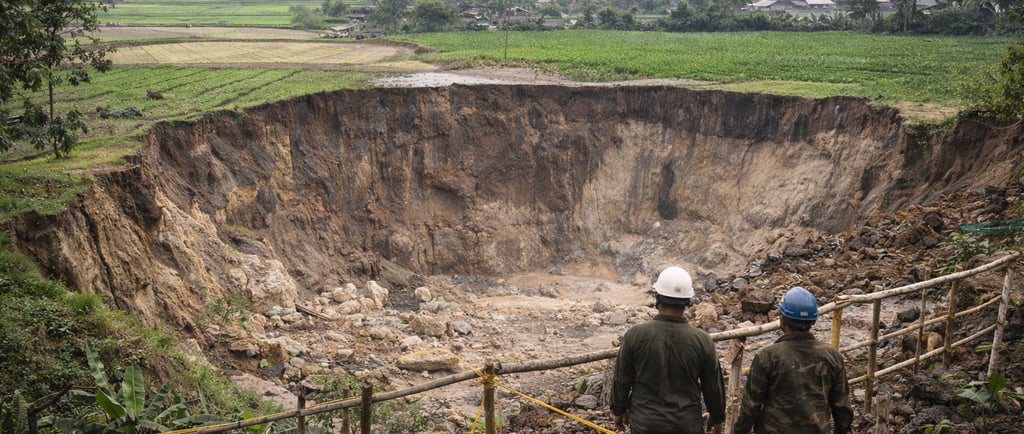
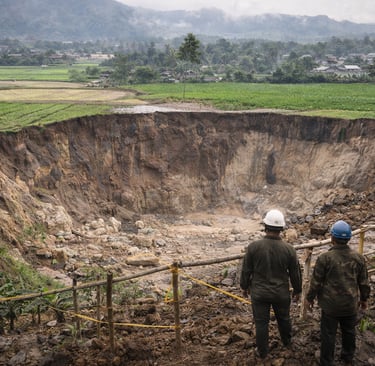
A massive crater resulting from landslides continues to grow in the central region of Aceh, Indonesia, already reaching approximately 3 hectares and swallowing entire farmlands. Local authorities explain that the soil remains unstable – easily absorbing groundwater – and that mass flooding at the end of 2025 drastically accelerated the expansion of the hole, destroying pepper crops and leaving farmers without a livelihood while they await government compensation.
Introduction to the Disaster in Aceh
In recent months, central Aceh, Indonesia, has been grappling with a significant environmental crisis, predominantly characterized by the emergence of a massive crater spanning approximately 3 hectares. This crater, which has resulted from a series of devastating landslides, has drawn alarming attention due to its profound impact on both the local landscape and the livelihoods of the residents.
The landslides triggering the formation of this crater are indicative of the increasing geological instability in the region, which is exacerbated by heavy rainfall and deforestation practices. The crater not only represents an ecological concern but has also led to the displacement of agricultural land, crucial for sustaining the local economy. Farmers in the vicinity have witnessed a drastic reduction in their productive areas, which has unfortunate ramifications on food security and economic stability.
As the crater expands, the challenges faced by the community continue to intensify. The fertile farmlands that once flourished with crops are now threatened, resulting in a substantial decrease in agricultural output. The repercussions of this situation are multifaceted, affecting not only the individual farmers but also the broader economic health of the region. The disruption of agricultural activities could potentially lead to increased food shortages, rising prices, and a decline in local employment opportunities.
This critical situation in central Aceh exemplifies the urgent need for environmental assessments, community support, and governmental intervention. Understanding the dynamics of this disaster is essential for formulating effective strategies to mitigate the impacts on the community and the environment, ensuring a response that addresses the immediate needs while considering long-term sustainability in a region already vulnerable to natural disasters.
The Geological Factors Behind the Crater's Formation
The formation of the expanding crater in Central Aceh can be primarily attributed to a combination of geological conditions that significantly contribute to soil instability. One of the central factors is the composition of the soil, which often includes a high percentage of clay and silt. These soil types, while capable of retaining water, can become overly saturated under heavy rainfall, leading to a reduction in structural integrity.
Moreover, the region's geological history plays a crucial role in the development of this phenomenon. The geological layers beneath Central Aceh are comprised of soft sedimentary rock formations that are prone to erosion. When groundwater levels rise due to prolonged rainfall, these flexible substrates may become saturated, weakening their stability and ultimately resulting in subsidence.
Groundwater absorption is a significant factor in the ongoing expansion of the crater. The soil's capacity to absorb and retain water facilitates not only the swelling of the ground but also promotes the transfer of moisture to deeper layers. This transfer creates pressure points within the earth and can lead to sudden collapses where the soil cannot support the upper layers. The ensuing loss of material accelerates the crater's growth, revealing a dynamic system in a constant state of change.
The interactions between these geological elements contribute extensively to the crisis. As the topsoil becomes destabilized and moisture levels fluctuate, the risk of further expansion increases. This interplay of geological conditions underscores the complexity of understanding the crater's formation and persistence amidst efforts to mitigate its effects. Therefore, probes into the geological factors at play are essential for devising effective strategies to address the situation in Central Aceh.
Impact of Recent Flooding Events
The recent flooding events in Central Aceh, which culminated at the end of 2025, have had profound implications on the region. Following sustained periods of heavy rainfall, the inundation led to the accelerated growth of the already precarious crater, a geological phenomenon that now poses serious threats to local communities.
Farmers, who were primarily engaged in the cultivation of pepper crops, have been particularly affected by the flooding. The sediment and debris brought by the rushing water buried large swathes of agricultural land, rendering it infertile and unusable. This loss of arable land directly impacts the livelihoods of those dependent on these crops, as pepper is a significant cash crop in the region. As local ecosystems continue to struggle under the pressure of flooding, the resilience of agricultural practices is increasingly tested.
Moreover, the flooding has exacerbated soil erosion, further complicating recovery efforts for farmers. With the loss of vital topsoil, alongside the destruction of irrigation systems, the long-term agricultural productivity of Central Aceh is in jeopardy. This aggravated situation not only threatens food security but also disrupts the local economy that heavily relies on agricultural exports.
The social fabric of the area is also under strain; communities are experiencing heightened anxiety about their future, grappling with uncertainty over income and the viability of rebuilding their agricultural ventures. It is crucial for local authorities and organizations to provide immediate relief and long-term strategies to mitigate the adverse impacts of these flooding events on agriculture and the broader community.
Local Farmers: A Community in Crisis
The expanding crater in Central Aceh, Indonesia, has profoundly disrupted the lives and livelihoods of the local farming community. For generations, these farmers have relied on their land to grow staple crops, sustain their families, and contribute to the local economy. However, as the crater continues to enlarge due to geological instability, many farmers have found their fields submerged or rendered completely unusable.
One farmer, Ahmad, recounts the moment he learned that his entire rice plantation was lost to the encroaching crater. "I have been cultivating this land for over twenty years. It was not just my job; it was part of my identity and heritage," he expressed with deep emotion. Like Ahmad, countless farmers are grappling with the harsh reality of being uprooted from their lifelong experiences. With the loss of crops comes the loss of income, as the ability to feed their families and provide for their basic needs disappears.
Besides the economic burdens, the psychological impact of this crisis is immeasurable. Farmers are faced with uncertainty about their future, which can lead to feelings of despair. Many have reported increased stress and anxiety levels, as they await government compensation that has been slow to materialize. A group of farmers has banded together to advocate for timely assistance, raising their voices not only to the local authorities but also to the media, in hopes of drawing attention to their plight.
The sense of community among these farmers remains strong despite their challenges. They support one another through this difficult time, sharing resources and information. This solidarity is crucial as they navigate the bureaucratic process, striving to rebuild their lives and adapt to the new reality created by the expanding crater. Their collective resilience is a testament to their enduring spirit and commitment to overcoming adversity.
Government Response to the Crisis
In response to the growing crisis in Central Aceh, the local government has initiated several measures to address the immediate needs of affected communities. Recognizing the adverse impact of the expanding crater on agriculture and local economies, the authorities have prioritized the assessment of damage and the development of a comprehensive recovery plan. This plan includes provisions for compensation to farmers whose lands have been significantly affected by the environmental changes.
Compensation measures are designed to provide financial relief for those who have lost crops or livelihoods as a result of the crater expansion. These measures aim to ensure that farm operations can resume as quickly as possible, allowing for a return to normalcy in the agricultural sector. Additionally, the government is facilitating access to grants and low-interest loans for farmers, enabling them to invest in alternative farming practices or rehabilitate affected lands.
Moreover, the local authorities are collaborating with various agricultural and environmental organizations to offer assistance and training programs for impacted farmers. These initiatives seek to educate farmers on sustainable practices and techniques that can mitigate the adverse effects of environmental changes. As part of ongoing assessments, the government is closely monitoring the crater's expansion and its implications, ensuring that response plans are adaptable to the evolving situation.
Community engagement has also been emphasized in this crisis response strategy. Open forums and information sessions are being conducted to inform residents about available resources and support. Through these channels, the government aims to foster a sense of unity and provide a platform for sharing experiences and challenges, strengthening resilience across affected communities in Central Aceh.
Long-term Implications for Aceh's Agriculture
The recent emergence of the expanding crater in Central Aceh has raised significant concerns regarding its long-term impact on local agriculture. Given that agriculture is a cornerstone of the Acehnese economy, the implications of this environmental crisis could be profound. The crater, along with the associated flooding, threatens not only the current crop yields but also the sustainability of agricultural practices in the region.
Firstly, the disruption of arable land due to the crater's expansion directly jeopardizes the future productivity of farms. The loss of fertile soil, combined with increased waterlogging from flooding, can lead to decreased agricultural output. Farmers may face challenges in maintaining their livelihoods if the land they depend upon becomes inhospitable. With rice, coffee, and various fruits being key crops in Aceh, any substantial interruptions in production can exacerbate food insecurity in the region.
Moreover, the economic implications extend beyond mere crop yields; they touch on broader socio-economic stability. The agricultural sector employs a substantial portion of the population in Aceh, and declining yields could result in job losses and decreased income levels among farming families. This economic strain may also lead to increased migration as individuals and families search for alternative employment opportunities elsewhere.
Furthermore, the disruptions may necessitate an evolution in farming techniques and practices. Farmers may need to adopt more resilient agricultural strategies, which could involve investing in new technologies or diversifying crops. However, these adaptations require resources and training that may not be readily accessible to all farmers in the region.
Ultimately, the long-term implications of the crater's expansion pose a multifaceted challenge to agriculture in Central Aceh. The region's ability to navigate these obstacles will be crucial for maintaining both food security and economic stability.
Conclusion: A Call for Action and Awareness
The situation in Central Aceh, Indonesia, reflects the pressing need for immediate action and sustained awareness regarding the perils of natural disasters faced by vulnerable communities. The expanding crater serves as a stark reminder of the unpredictable nature of geological phenomena and the devastating impact they can have on livelihoods, infrastructure, and the environment. It underscores the importance of enhancing disaster preparedness in regions that are already susceptible to such crises.
Local authorities, governmental bodies, and international organizations must collaborate to develop effective monitoring systems that can provide real-time data on geological activity. This is crucial in ensuring timely interventions that could save lives and minimize damage. Such initiatives should be accompanied by robust training programs for community members to equip them with the knowledge and skills needed to respond effectively to disasters.
In addition, raising awareness within both local and global communities about the challenges faced by Central Aceh is vital. Engaging stakeholders, including NGOs and academic institutions, can foster partnerships aimed at funding research and implementing action plans that prioritize resilience. By advocating for ongoing support and resources, we can contribute to building a safer environment for those at risk.
Ultimately, addressing the ongoing crisis in Central Aceh transcends individual efforts; it requires a holistic approach involving various sectors working in harmony. Public awareness campaigns should be launched to inform people about the existing vulnerabilities and to promote collective responsibility in disaster management. Only through such concerted efforts can we hope to mitigate the impact of future disasters and safeguard the well-being of affected communities.
MSM GLOBAL NEWS
Follow news and analysis accurately.
All rights reserved MSM GLOBAL NEWS© 2026.