

US Forces Intercept Panamanian Oil Tanker: A Crackdown on Venezuelan Oil Smuggling
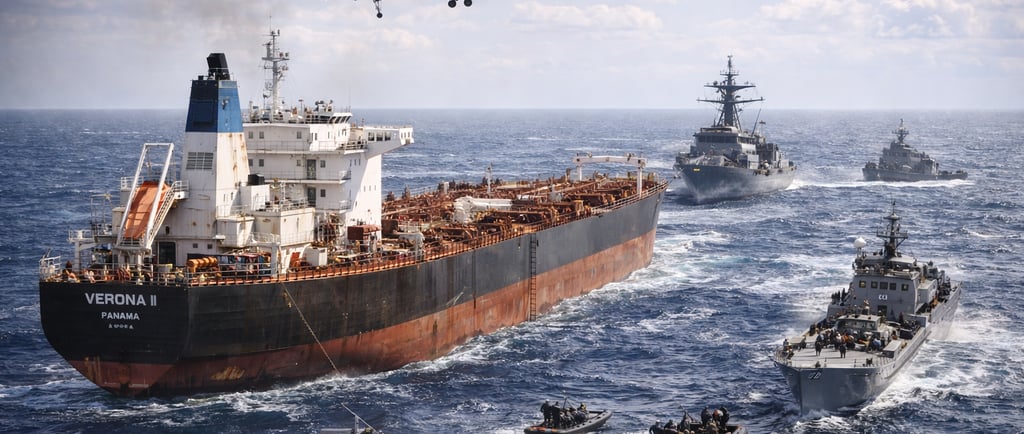
US forces intercepted and boarded a Panamanian-flagged oil tanker, the Veronica III, suspected of smuggling Venezuelan oil across the Indian Ocean in violation of US sanctions. This is the second interception in two weeks – days earlier, the US had already pursued and detained the Aquila II – after President Donald Trump ordered a strict blockade to prevent illegal oil exports from Venezuela since the ouster of Nicolás Maduro in January.
Introduction: Context of the Interception
The recent interception of the Panamanian oil tanker, Veronica III, and the subsequent actions against the Aquila II by US forces mark a significant escalation in the enforcement of sanctions against Venezuela. As part of an ongoing strategy to combat oil smuggling operations that undercut US and international sanctions, these measures underscore the United States' commitment to curbing the illicit flow of resources that bolster the regime in Caracas. Venezuela's economic picture has been significantly marred by a combination of government mismanagement and extensive sanctions, heavily focusing on its oil sector, the crux of its economy.
Over the past few years, the US government has enacted a series of economic sanctions targeting Venezuelan oil exports, aiming to diminish the regime's finances and limit its ability to fund operations that threaten regional stability. The interceptions of the Veronica III and Aquila II reflect not merely a tactical maneuver in maritime enforcement but a broader strategy in US foreign policy aiming to exert pressure on Venezuela’s current administration. These incidents exemplify the increasing vigilance with which US forces monitor waterways known to be routes for smuggling operations.
The implications of oil smuggling extend beyond national borders, influencing not only US-Venezuelan relations but also the dynamics of international relations concerning energy trade. Countries that engage with illegally sourced Venezuelan oil risk straining their ties with the US, which champions a rules-based international order. Thus, the interception of tankers becomes a dual opportunity to safeguard US foreign policy interests while addressing the significant challenges posed by illegal trade practices.
As the situation evolves, it will be critical to assess how such actions will shape the geopolitical landscape in Latin America, particularly in the context of US-Venezuela relations and the intricacies of global oil markets.
Overview of Recent US Sanctions on Venezuela
The United States has instituted a series of sanctions against Venezuela, particularly targeting its oil industry, which stands as a crucial source of revenue for the nation. These measures have intensified significantly following the controversial ousting of Nicolás Maduro in January. The sanctions are intended to undermine the Venezuelan government’s capacity to generate income, thereby pressuring it to restore democratic practices and respect for human rights.
Initially, U.S. sanctions on Venezuela began in 2015, but following the political upheaval earlier this year, they have escalated in terms of both scope and impact. The sanctions aim to reduce the revenue derived from oil exports, diminish financial transactions linked to the Venezuelan oil sector, and curtail foreign investments. This multifaceted approach seeks to isolate the Maduro regime economically and politically.
As a result of these sanctions, the Venezuelan oil industry has experienced significant disruptions. Oil exports, which once constituted the backbone of the Venezuelan economy, have dwindled sharply due to restrictions on sales. Additionally, the U.S. has enforced secondary sanctions that penalize countries and companies that engage with the Venezuelan oil sector, further exacerbating the situation for Maduro and his administration.
The international response to these sanctions has varied. While some countries support the U.S.'s efforts in imposing sanctions as a means to restore democracy in Venezuela, others criticize these measures as harmful to the civilian population and counterproductive to resolving the political crisis. As these developments unfold, the intricate relationship between sanctions, international diplomacy, and the future of Venezuela continues to evolve, highlighting the complexities of balancing ethical considerations with geopolitical strategy.
The Veronica III: Details of the Interception
The oil tanker Veronica III has garnered attention in recent weeks due to its alleged involvement in smuggling Venezuelan oil. This vessel, registered under the Panamanian flag, has been a subject of scrutiny given its connections to shipments that reportedly violate international sanctions against Venezuela. The ownership of the Veronica III is linked to an array of companies operating primarily in the oil sector, adding layers of complexity to the investigation surrounding its activities.
Prior to its interception by U.S. forces, the Veronica III was frequently seen in the Caribbean, making regular treks that raised suspicions regarding its cargo. The U.S. Coast Guard monitored the vessel's patterns closely, particularly its interactions with known Venezuelan oil extraction sites. Intelligence suggested that the tanker was on a course that could enable it to transport substantial amounts of oil, potentially intended for countries that have flouted sanctions, thereby contributing to the ongoing economic struggles faced by Venezuela.
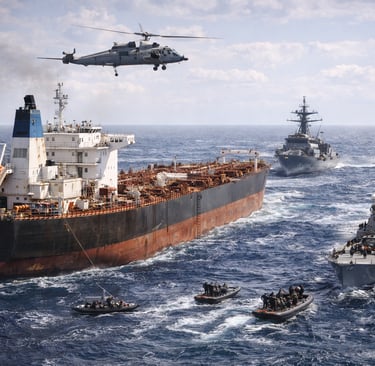
The operational details of the interception unfolded as U.S. naval forces boarded the Veronica III after tracking it in international waters. Reports indicate that the boarding was carried out without incident, with no significant resistance from the crew. This operation not only highlights the commitment of U.S. forces to monitor and enforce sanctions but also underscores the complexities of maritime law enforcement against smuggling operations that have continued despite heightened scrutiny. Authorities seized the vessel and its cargo, demonstrating a clear stance against illegal oil trade that undermines international regulations.
The Impact of Smuggling Venezuelan Oil
The illegal smuggling of Venezuelan oil poses significant economic repercussions not only for Venezuela but also for the broader global oil market. As a country rich in oil reserves, Venezuela has historically relied heavily on oil exports for its economic stability. However, the ongoing crisis has led to a decline in legitimate oil revenues, prompting the government to resort to smuggling as a means of survival. This illicit trade severely undermines the Venezuelan economy, as the state loses much-needed revenue and control over its own natural resources.
Furthermore, the smuggling of oil impacts global oil prices, which are influenced by supply and demand dynamics. When Venezuelan oil enters the market through illegal channels, it can create fluctuations in price, directly affecting both producing countries and consumers. These abrupt changes can introduce instability into the energy sector, complicating the planning and forecasting of oil supply both regionally and internationally. This phenomenon raises concerns among oil-dependent nations and investors, who may react to perceived threats from the unregulated influx of Venezuelan oil.
On a geopolitical level, the smuggling routes often involve cooperation between various state and non-state actors, which can lead to a complicated network of alliances and conflicts. The United States views these operations as not only a violation of international law but also as a direct threat to national security. The illicit trade facilitates revenues for adversarial regimes, potentially funding activities that undermine US interests in the region. In this context, the crackdown on Venezuelan oil smuggling by US forces is indicative of a larger strategy to disrupt these networks and assert control over international maritime trade routes.
Comparison with Previous Interceptions: The Case of Aquila II
The recent interception of the Panamanian oil tanker Veronica III by U.S. forces presents a significant opportunity to analyze operational strategies in the context of prior interceptions, notably that of the Aquila II. While both incidents target oil smuggling associated with Venezuela, several distinctions and parallels can be observed regarding the tactics employed, the vessels involved, and the implications for U.S. anti-smuggling efforts.
In the case of the Aquila II, intercepted in early 2022, U.S. naval forces executed a comprehensive and coordinated approach, involving surveillance and intelligence-sharing with international partners. This operation showcased the effectiveness of maritime reconnaissance in identifying vessels suspected of transporting illicit oil, enabling U.S. forces to intervene with precision. Similarly, the interception of the Veronica III utilized refined intelligence and a strategic maritime presence to thwart another smuggling attempt, continuing the trend of increased U.S. engagement in the region.
However, notable differences exist between the two operations. The Aquila II was primarily targeted for its direct association with oil shipments from Venezuela to Cuba, which was a significant factor in its interception. The Veronica III, while also linked to Venezuelan oil, had broader implications due to its connections with networks known for maritime deception techniques, such as altering transponders to evade detection. This highlights an evolving dynamic in smuggling tactics that U.S. forces must continuously adapt to counteract effectively.
Both cases underscore the ongoing commitment of the U.S. to combat oil smuggling, which poses a threat to regional stability and undermines sanctions imposed on Venezuela. The strategic responses observed in these interceptions indicate a robust policy framework that seeks to restrict illicit oil shipments while maintaining maritime security in strategically vital regions.
International Reactions and Consequences
The recent interception of the Panamanian oil tanker by US forces has prompted a diverse array of reactions from countries and global organizations, indicative of the complex geopolitical landscape surrounding Venezuelan oil smuggling. Many nations are closely scrutinizing the implications of the US intervention, particularly in light of the continuing tensions between the United States and Venezuela. Countries in Latin America, especially those with historical ties to Venezuela, have expressed concern regarding the unilateral actions taken by the US, viewing them as a potential violation of international maritime law. In contrast, other nations support the initiative, highlighting the need to combat illegal oil trade that undermines human rights and contributes to economic instability in the region.
Several countries have begun to reassess their diplomatic relations with the US and Venezuela in response to this incident. For instance, nations that maintain a friendly stance towards the Maduro regime are vocal in their opposition to what they perceive as US aggression. They argue that the actions of the US could result in potential retaliatory measures and heightened regional tensions. Conversely, allies of the United States see this operation as a legitimate enforcement of sanctions intended to curb the financing of illicit activities and support US-led strategies in combating authoritarian regimes.
Global organizations such as the United Nations and the Organization of American States have called for dialogue and negotiation to resolve the ongoing crisis rather than military intervention. They stress the importance of diplomatic measures and the need to uphold international norms and treaties. As countries assess the repercussions of the US's decisions, the broader implications on global geopolitics become increasingly apparent, especially regarding energy security, economic dependencies, and alliances.
In summary, the interception of the oil tanker is a pivotal moment in the ongoing saga of Venezuelan oil smuggling. The reactions range from support to condemnation, indicating that international relations may shift as a result of the US’s strategic maneuvers. The unfolding consequences will require careful attention as they may redefine geopolitical dynamics in the region and beyond.
Conclusion: The Future of Venezuelan Oil and Sanctions Enforcement
In examining the recent interception of a Panamanian oil tanker by US forces, it becomes evident that the enforcement of sanctions on Venezuela is entering a critical phase. This operation underscores the ongoing commitment of the United States to combat oil smuggling that directly undermines sanctions aimed at crippling the Venezuelan economy. The interception signifies not merely a singular event but rather a potential shift in tactics as US authorities seek to tighten the noose around illicit oil exports that fuel the regime of President Nicolas Maduro.
As we reflect on the future trajectory of Venezuelan oil exports, the likelihood of further interceptions appears considerable. With the US determined to reinforce sanctions, it is plausible that both maritime and aerial surveillance will increase, thereby heightening the prospects of more interdictions. This strategic enforcement may result in a significant reduction in Venezuela's oil revenues, which are crucial for the survival of its current government. The ongoing struggle imposed by sanctions suggests that unless there is a significant change in political leadership or policy, the Venezuelan oil sector may continue to face severe restrictions.
Moreover, the implications for US foreign policy are profound. A sustained approach towards strict sanctions may lead to increased tensions both regionally and globally, as Venezuela seeks allies that might assist in circumventing these measures. Alternatively, should diplomatic negotiations bear fruit, the prospects of new agreements could open pathways for regulated oil exports, contingent on substantial political reforms. The future of Venezuelan oil and enforcement strategies will thus hinge on the interplay of diplomacy and sanctions, creating a complex tableau of geopolitical dynamics that will continue to evolve.
MSM GLOBAL NEWS
Follow news and analysis accurately.
All rights reserved MSM GLOBAL NEWS© 2026.